*Content created and provided by Smart Travel News
In an environment where business travel increasingly demands agility, the Business Travel sector faces the ongoing challenge of balancing corporate control with traveller autonomy.
To address this need, advanced technological solutions make it possible to centralise bookings, automate expense policies and efficiently integrate sustainability criteria.
In this interview with Sergi Anter, Digital Selling, Partners & Supplier Manager at Ween, we explore how software innovation, combined with expert advice and a modular approach, is making travel management more accessible to both SMEs and large corporations, facilitating the transition towards more productive, efficient and sustainable models.

Ween is one of the more than 150 members of the Tech Tourism Cluster. Could you briefly explain the main features of your company?
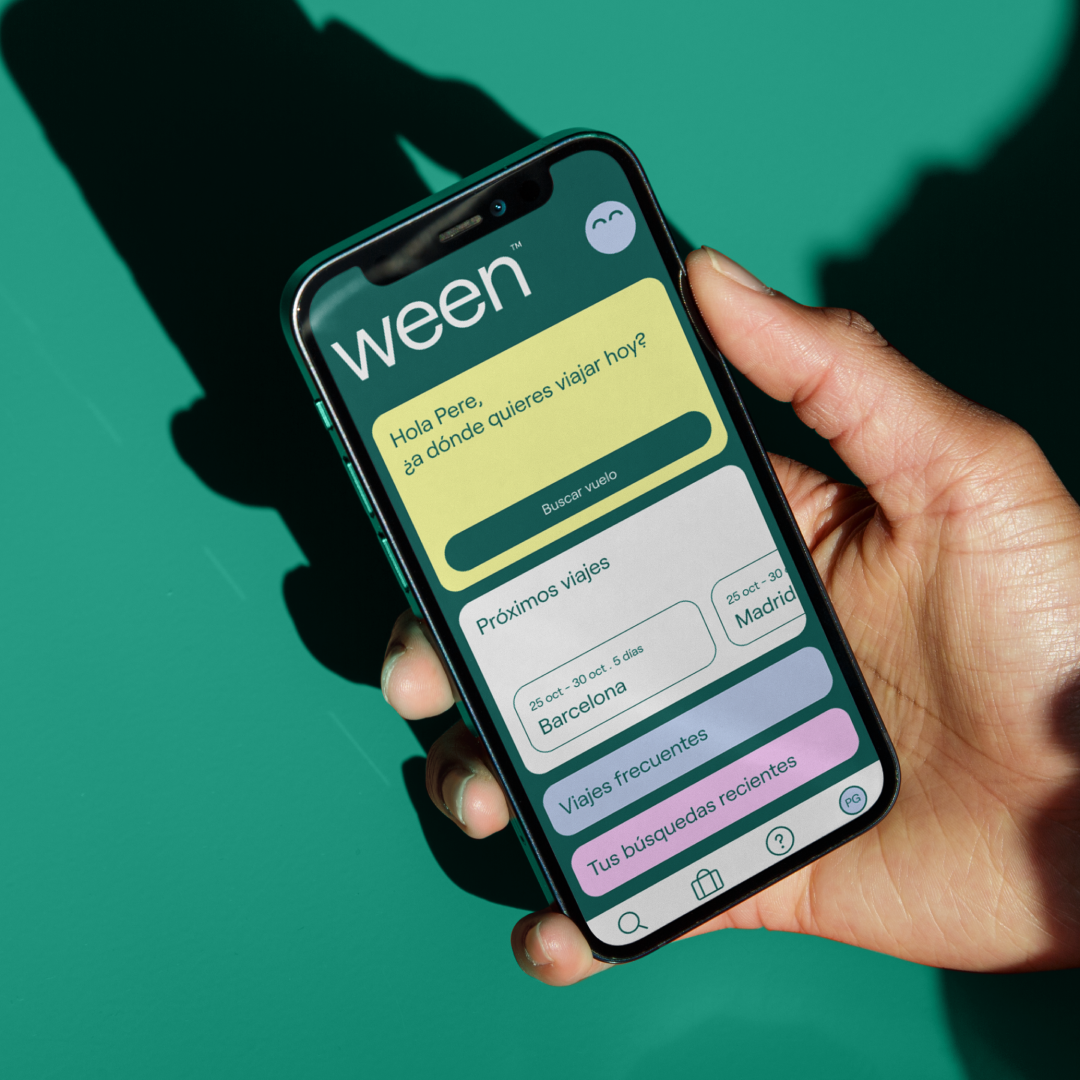
Ween is a technology company specialising in corporate travel management. Through a web platform and a native mobile app, it centralises the booking of flights, trains, hotels and rental vehicles, together with other features related to travel control and administration.
Our solution combines the possibility for travellers to make their own bookings independently with features designed for company managers: travel policies, approval workflows, cost centres, invoice references and different role-based permissions, as well as multi-company management, alerts, traveller location maps for assistance or security purposes, reports and visibility over bookings made.
We are committed to a hybrid management model. Technology makes it possible to handle routine arrangements independently, while our Ween Advisors — agencies specialising in business travel — provide professional assistance whenever a booking, incident or itinerary requires human intervention, or when a company or traveller needs expert advice to organise a complex trip.
We cater to companies of different sizes, from small businesses with few travellers to organisations with more complex structures, policies and integration requirements.
There has always been a tension in Business Travel between employee flexibility and the level of control required by companies. How does Ween address this dilemma?
We do not believe that corporate control and a good traveller experience are incompatible objectives. Problems arise when control is exercised through processes outside the booking process, or when it is not aligned with travellers' needs and the travel market. Maintaining control through emails, manual authorisations or spreadsheets only creates inefficiencies, scattered information and disruptions.
Our approach consists of incorporating company rules directly into the travel process. Companies can define policies, budgets, cost centres, permissions and approval workflows. This way, travellers know from the outset the framework within which they can make bookings, while managers have traceability and visibility without having to manually review every transaction.
At the same time, users retain the freedom to choose between different transport and accommodation options, configure their personal profiles and preferences, check their trips through the app and receive assistance whenever they need it.
The goal is not to eliminate every exception, since corporate travel is full of changes and unforeseen circumstances, but to automate routine cases and reserve human intervention for situations that genuinely require it. The shared benefit comes when companies gain control without adding bureaucracy, while travellers enjoy greater autonomy without having to operate outside corporate policies.
You have automated travel policies, approval workflows and expense control integration with OKTicket. What has been the biggest technological and product-related challenge?
The main challenge has been turning a highly fragmented ecosystem into an apparently seamless user experience. A single booking involves multiple content sources, systems and different rules: GDS, NDC and low-cost airline distribution, various rail operators, hotel distributors, car rental companies, payment methods or guarantees, internal policies and expense management systems.
The difficulty lies not only in connecting these systems, but also in standardising their information and maintaining consistency throughout the entire booking cycle.
From a product perspective, another challenge has been, and continues to be, simplifying the purchasing process through an intuitive user interface with as few clicks or steps as possible, without hiding relevant information. It is also important to integrate new suppliers and products that add value for business travellers and companies, adapting them to our platform, as is the case with OKTicket and, more recently, Reclamatravel.
With OKTicket, we offer a complementary solution for the digital management of all expenses through an expert partner, providing companies with greater control and efficiency by eliminating manual tasks that add no value.
How does Ween help small and medium-sized enterprises access Business Travel solutions?
Many SMEs manage their travel arrangements in a fragmented way because they believe that implementing a specialised tool requires a high volume of trips, a complex technology project or a fixed cost that is difficult to justify. The result is often a combination of bookings made through different websites, decentralised or missing invoices, limited consolidated information on spending, lack of control and inefficiency.
One of our challenges is to explain to companies and support them in understanding the need for a travel management solution and specialised assistance, both of which contribute to improving productivity regardless of travel volume.
Ween addresses this reality through a modular model. We offer a Freemium plan for micro-businesses with few travellers, or for companies that want to try the platform before committing. This allows them to test our tool during an initial phase and subsequently upgrade to our Plus plan, which enables them to add multiple users, configure travel policies and access multi-company management features.
Centralisation makes it possible to understand how much is being spent and how, who is travelling, and which cost centre or project each expense should be allocated to. It also facilitates access to professional travel content and negotiated rates, without SMEs or other companies having to search for alternatives across multiple websites.
Furthermore, our focus is no longer limited to SMEs. Many of our current clients are large corporations. These companies are looking for a digital tool to manage simple or repetitive trips. They no longer want to rely on emails or phone calls to arrange bookings, and our solution provides what they need while maintaining the support, advice and management services of their usual travel agency (our Ween Advisors).
Democratising Business Travel does not mean automatically guaranteeing savings, as these depend on travel volume, booking lead time and purchasing behaviour. It means making control, information and assistance tools accessible to companies that were previously mainly associated with large corporations.
You hold certifications such as Biosphere and Green & Human. How is Ween evolving to integrate sustainability and carbon footprint management?
The Biosphere and Green & Human certifications reflect our values and help us incorporate environmental and social criteria into our company's management. However, we believe that certification should not be considered an end goal, nor should it replace the measurement of the actual impact of travel.
From a product perspective, the next step is to progressively integrate sustainability into the purchasing decisions made by companies and travellers. This means being able to display estimated emissions, compare transport alternatives where appropriate and consolidate information about the carbon footprint associated with each company's business trips.
Today, providing this information to business travellers in real time is extremely complex and challenging, due to the lack of common standards regarding the information itself and access to it.
The next step is to ensure that this data is not limited to a report generated after the trip. It should be incorporated into travel policies, approval processes and monitoring dashboards, alongside variables such as price, duration and fare conditions.
Our goal is to present users with all available options and alternatives in a highly visual way before they book, while raising awareness of the environmental impact of choosing one means of transport over another.
The challenge is to use consistent methodologies and clearly explain that these figures are estimates, avoiding any suggestion of a level of precision that the available data cannot support. Sustainability must become a practical and measurable management criterion, rather than simply a statement of intent.
We currently provide our clients with reports on carbon emissions based on the means of transport used and the origin and destination of each journey.
What synergies do you find within the Tech Tourism Cluster, and how do they help you compete with major global players?
Being part of the Tech Tourism Cluster (TTC) means being part of a business environment whose companies are closely aligned with Ween's focus on tourism and technology.
This ecosystem allows us to build synergies around a shared objective: implementing and developing technology for the tourism ecosystem.
Furthermore, after two years as a member of the TTC, and with pride in being its 100th member, the cluster has enabled us to establish new contacts, share knowledge and concerns, access training and visibility opportunities and, why not, generate new business opportunities with other companies within the cluster.
I genuinely believe that the organisation has succeeded in bringing together a group of members and companies with a highly professional mindset and shared interests, while also fostering a very approachable atmosphere. It allows us to share experiences, create synergies and, it has to be said, enjoy a really great atmosphere.
Author

Member of the Research Group on Tourist Accommodation and Catering at the CETT – UB Campus. Professor of Digital Marketing. Lecturer. Member of Scientific Committees of Congresses. Foundrising, Entrepreneurship & Awards CETT Fundació – CETT. Doctor (PhD) University of Barcelona
Recent posts

30 October 2026

26 October 2026

22 October 2026

20 October 2026
Tags
-
Interviews
Subscribe
Subscribe here and stay tunned on what's next