*Content created and provided by Smart Travel News
The corporate events and congress sector faces the challenge of simplifying complex operations and reducing reliance on fragmented tools.
Implementing comprehensive technology platforms makes it possible to automate key processes — from initial registration and document signing to access control and hotel management — enabling an immediate response to unforeseen circumstances and optimising personalised communication with attendees.
To explore this area in greater depth, we had the opportunity to interview Xavier Casals, CEO & CTO of Parlam and BeGuest, two SaaS platforms designed to address specific needs in translation management and guest and event management. BeGuest is one of the more than 150 members of the Tech Tourism Cluster, a network of companies with hybrid business models combining technology and tourism, alongside organisations within the technology and knowledge ecosystem, such as universities and research centres.
BeGuest is one of the more than 150 members of the Tech Tourism Cluster. Could you tell us about the key features of your company?
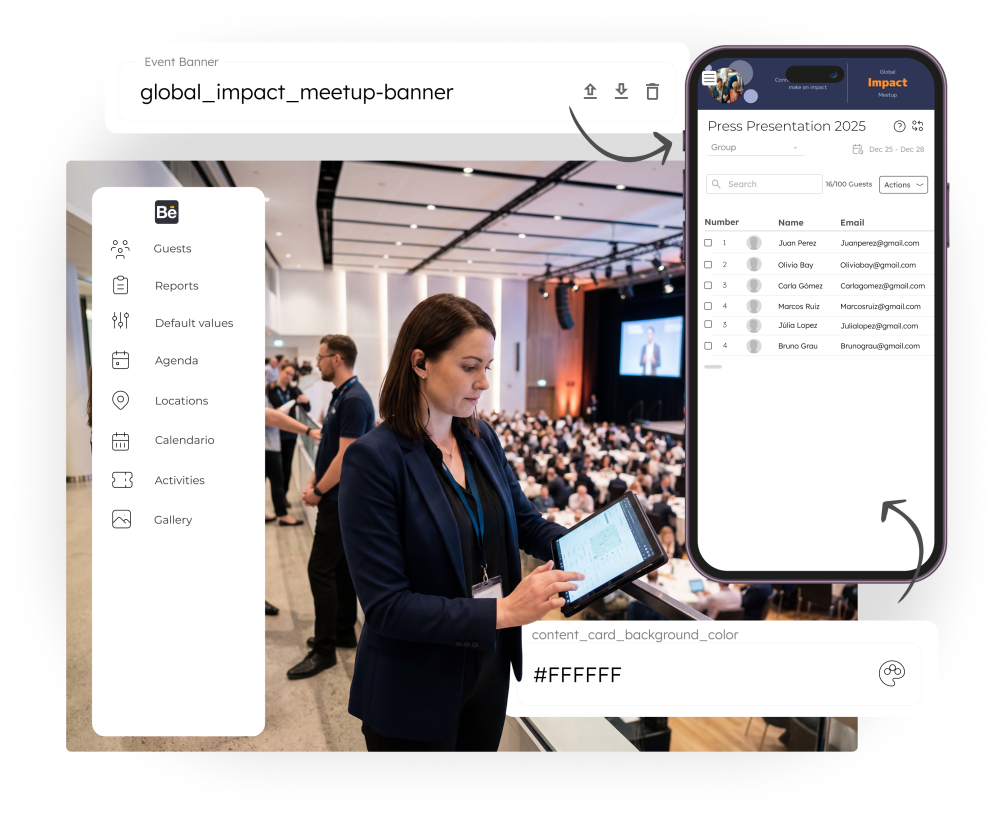
BeGuest is a platform that supports agencies and event teams throughout the entire event delivery process. From opening registrations to managing access on the day of the event and producing post-event reports, the idea is to give organisers a single place to manage everything that happens. We centralise attendee information, communications and logistics, including hotel and transport management. The aim is to make event teams' work easier and eliminate the need to rely on multiple disconnected tools.
We mainly work with event agencies, event managers and departments responsible for organising corporate events, congresses and conventions. These professionals need a genuinely powerful tool, but they cannot afford to waste time figuring out how it works.
If I had to identify what sets us apart, it would be the way we work with our clients. We maintain close relationships with the agencies and professionals who use BeGuest because we understand that they are the ones who know the challenges of organising an event best. Their needs have a direct influence on our product roadmap.
We also have a highly agile development structure based on a continuous integration and continuous delivery (CI/CD) strategy, which allows us to introduce improvements and new features very quickly. We work in very short development cycles, so when we identify a genuine need, we can develop a solution and put it into production within a matter of days. This speed is no coincidence; it comes from the way the company is structured internally. A large organisation cannot listen and deliver at this pace. We can, and that is where we have the advantage.
Looking ahead, we want to become the invisible copilot for agencies and companies: the system that supports the entire event delivery process from beginning to end, without getting in the way. And we do not want to limit ourselves to what happens during the event itself. We are expanding horizontally through integrations with ERPs, CRS systems and other platforms. Our goal is for BeGuest to become the operational hub from which agencies manage their events, allowing their teams to focus their time on what really matters: making sure the event runs smoothly.
BeGuest describes itself as an end-to-end solution covering the stages before, during and after an event, from registration and the event website to final reports. What would you say is the biggest traditional pain point for event organisers that your platform addresses most radically?
One of the biggest headaches for any event organiser is probably managing constantly changing information and ensuring it reaches the right people at the right time.
Take attendee data collection, for example. Personal information, dietary preferences, allergies and flight details can require an enormous amount of time when managed through emails and spreadsheets. With BeGuest, each guest has access to a portal where they can enter and update their details directly, keeping the information accessible to the organising team.
Another very common example is document signing. Nobody wants to find themselves facing a queue of 200 people waiting to sign an authorisation form, only to discover that the printer has run out of ink. We would rather allow guests to sign the necessary documents digitally, through their own portal, several days before arriving at the event.
However, unexpected situations are where operations are truly put to the test. Imagine a driver waiting at the airport for an attendee who reported a flight change just an hour earlier. Or imagine the client deciding to give away T-shirts during an event, requiring the collection of sizes from 500 people. These situations can overwhelm even a perfectly organised team.
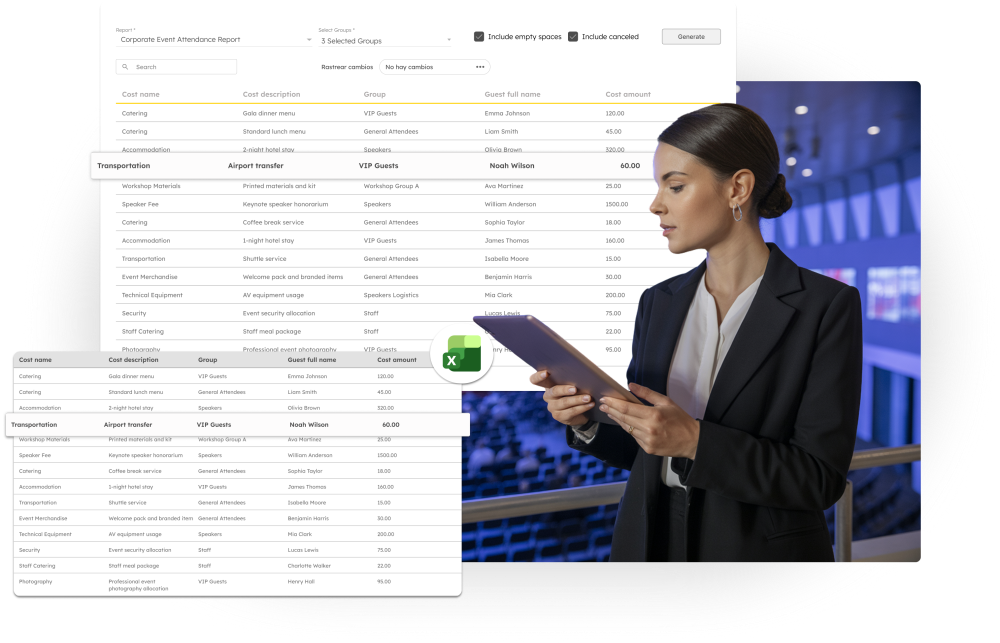
BeGuest makes it possible to manage these changes using up-to-date information and generate reports reflecting the latest modifications, allowing teams to respond without having to manually reconstruct all the information.
Ultimately, the goal is to ensure that a last-minute change does not trigger a chain of problems for the entire organisation.
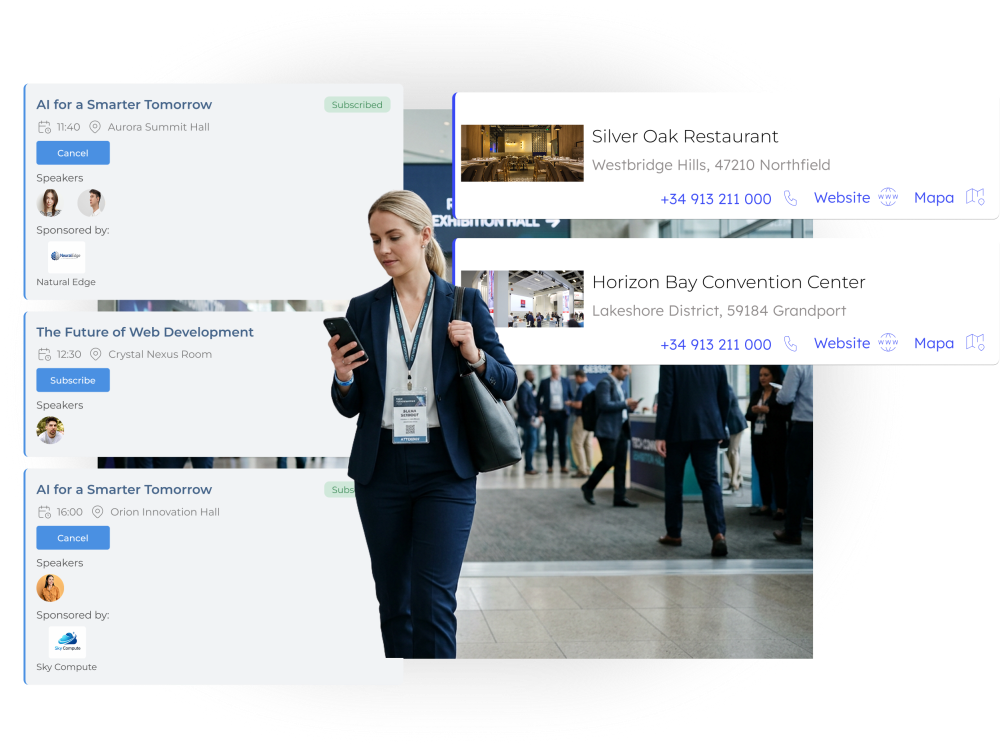
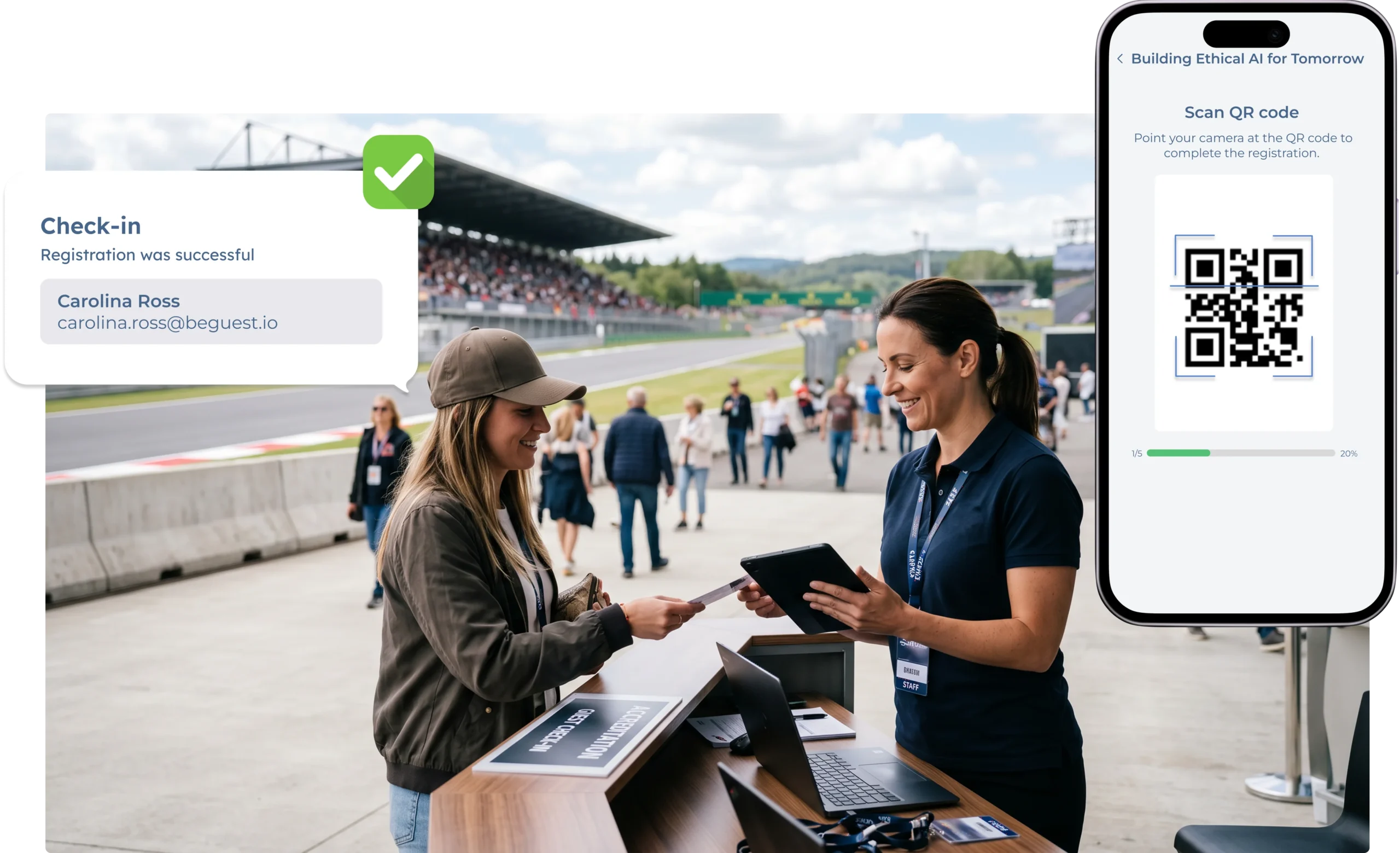
The app and guest portal centralise schedules, networking, chats and access control through QR codes scanned by staff. How have you balanced the technical capabilities of the tool for organisers with a user experience (UX) that is sufficiently seamless and intuitive for attendees?
No matter how much work you put into UX during the design stage, the best judge will always be the client and the real-life issues users encounter. If something is not intuitive, you discover it as soon as the feature goes live.
In our case, we work with two user profiles that have very different needs.
On the one hand, there is the organiser, our direct client, who has access to a very powerful tool. Let's be honest: that level of functionality requires training, which is why we support our clients every step of the way. A BeGuest client should never feel left on their own, because we do not consider support a secondary concern.
On the other hand, there is the guest, who represents our biggest design challenge. Guests come from all kinds of backgrounds and are rarely technically minded. They need to be able to use the guest portal, document portal, survey portal and app intuitively, without having to wonder how each feature works. That is the standard we set for our design, and we are undoubtedly achieving it.
At an event, not all attendees need to receive the same information or at the same time. How can technology make communication with guests more relevant and personalised before, during and after an event?
The key is understanding that communicating well does not mean communicating more. It means ensuring that every guest receives only the information they need, when they need it.
A single event can bring together very different attendee profiles, with different schedules, hotels, timings, activities and needs. If all communications are sent out indiscriminately, some attendees will inevitably receive information that is irrelevant to them. That is why segmentation is such an important part of our work at BeGuest. The information you already have about each guest allows you to create groups and target communications only to the people they actually concern.
This process starts well before the event itself. Through the platform, you can design and send personalised emails using the built-in editor, segment recipients and monitor campaigns and metrics in detail. But communication does not stop when guests arrive. Changes and questions arise during the event, which is where more immediate channels, such as chat and push notifications through the app, come into play.
For us, two-way communication is essential. We do not want guests to be merely recipients of messages; we also want to hear their voices. That is why surveys allow us to collect their feedback and understand what is working and how they have experienced the event.
Ultimately, the goal is to enable organisers to manage the entire conversation from a single environment, while giving guests the feeling that the information they receive is relevant to them at every stage.
Looking at the evolution of the corporate events and congress industry, where is demand for technology heading, and what new capabilities or automations are you planning to introduce to BeGuest?
We believe the sector is moving towards increasingly connected and automated management. Event managers need the tools they use to communicate with one another, while ensuring that a significant proportion of operational tasks no longer depend on manual intervention.
Our roadmap is ambitious and is moving precisely in that direction, with the aim of establishing BeGuest as a comprehensive ERP for event companies and agencies.
One of our main areas of development is integrations. We are designing a framework that will allow us to connect with external tools and prevent the platform from operating in isolation. For example, we want to communicate event changes and unexpected situations directly through Slack, Teams, WhatsApp or email, depending on how each organisation works. We are also working on connections with hotel management systems (CRS) to automate hotel bookings and room allocation, as well as cost calculations, eliminating the need for manual data entry. In addition, we are building connections with CRMs to exchange guest information and with ERPs to transfer all the data required by operations and finance teams.
The other key area is advanced workflows. We are developing an automation engine based on simple business rules, which we particularly want to leverage during the On Site phase to make operations more responsive. The idea is for an event or change to automatically trigger tasks that someone would otherwise have to rush to complete manually.
Consider a very common scenario: a driver reports that their bus will be delayed. Instead of someone on the team having to locate all the passengers and notify them individually, we want BeGuest to detect the incident and automatically send a notification to everyone affected.
The same applies to a hotel change, which can trigger adjustments to transport arrangements and the information each guest receives. Our intention is for these actions to be coordinated and executed directly through the platform.
Once these two components are in place, the next phase will be to develop our own MCP and an AI-powered assistant capable of operating the platform through the app using a simple voice command.
We envision a platform that can respond to organisers' needs while an event is underway, without requiring them to keep their eyes constantly on a screen. That is the direction we want to take: progressively allowing technology to handle tasks that can be automated, so agencies can focus on looking after their guests and managing the overall event experience.
You are part of a leading innovation environment through the Tech Tourism Cluster ecosystem. What synergies do you find in collaborating within this network of traveltech companies, and how does it help you scale your technology in the face of global distribution giants?
The first thing it brings us is visibility, which is always valuable. Beyond that, the Cluster brings together key people and companies in the sector, naturally creating synergies. For us, the value goes beyond direct business opportunities: it provides a highly reliable barometer of what is happening across the industry, helping us make informed decisions about our roadmap.
Compared with the major distribution giants, being part of a network like this allows us to move quickly and learn from the ecosystem itself, which is precisely where a company of our size can gain an advantage. We also believe collaboration between specialised companies is an effective way to drive innovation. It is not just about generating business opportunities, but also about sharing knowledge and finding ways to connect technologies that complement one another.
Author

Member of the Research Group on Tourist Accommodation and Catering at the CETT – UB Campus. Professor of Digital Marketing. Lecturer. Member of Scientific Committees of Congresses. Foundrising, Entrepreneurship & Awards CETT Fundació – CETT. Doctor (PhD) University of Barcelona
Recent posts

08 October 2026

08 October 2026

07 October 2026

07 October 2026
Tags
-
Interviews
Subscribe
Subscribe here and stay tunned on what's next