*Content created and provided by Smart Travel News
Efficient water management has become one of the major strategic challenges facing the tourism and hospitality industries. Integrating smart monitors and real-time data platforms makes it possible to track water consumption during each guest stay without compromising the guest experience or comfort.
By combining awareness, behavioural change and gamification, these technologies achieve significant reductions in both water consumption and associated energy use. This demonstrates that accurate data collection is essential to moving towards a more sustainable hotel model aligned with the demands of the green transition.
To learn more about this technology, we interviewed the people behind the startup Defcon8: Javier Ruiz, CRO, and Javier Ray, CEO and co-founder.
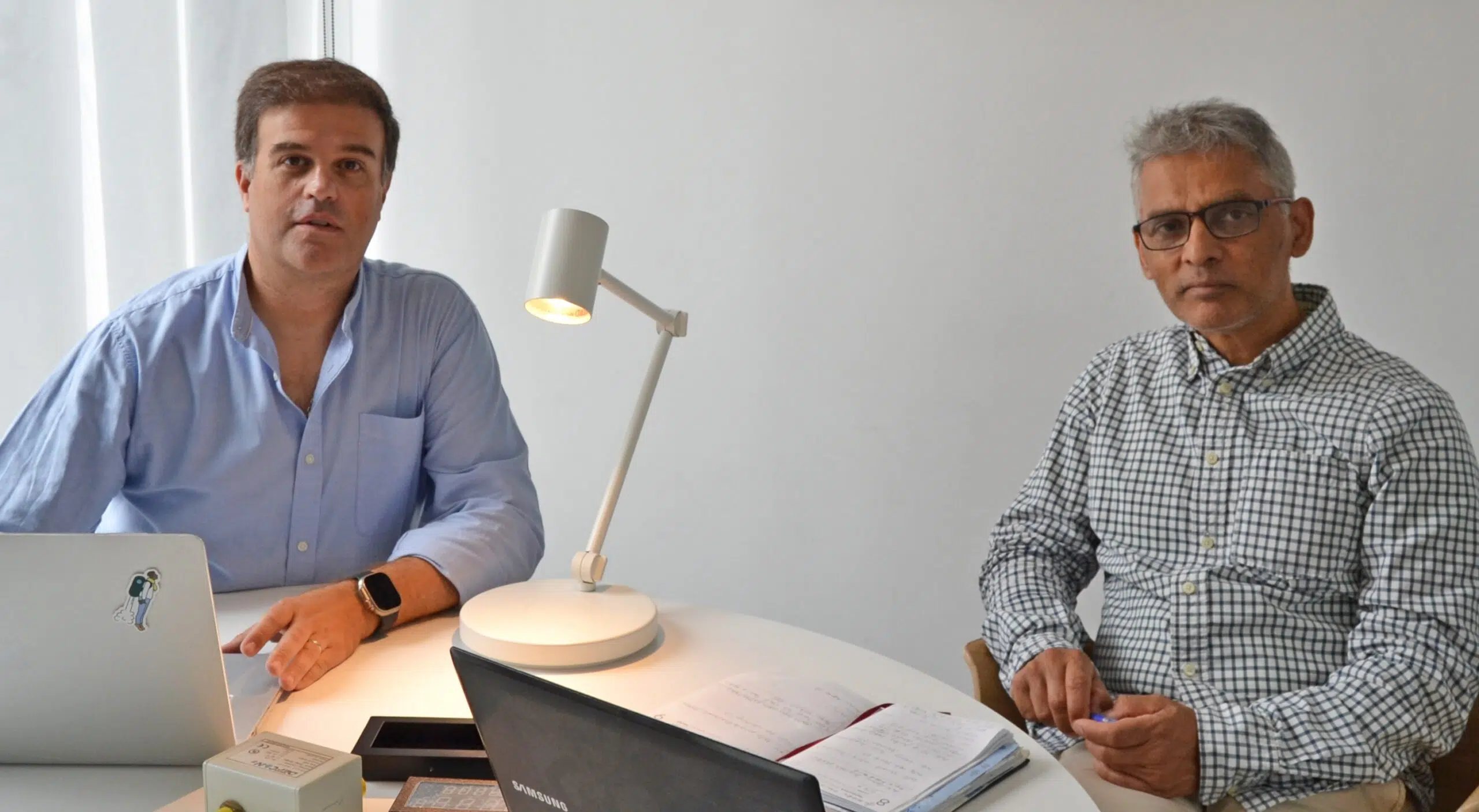
Defcon8 is one of the Tech Tourism Cluster’s more than 150 member companies. Could you briefly explain the key elements of your business?
Defcon8 is a sustainability startup based in Sant Cugat del Vallès (Barcelona) that turns water consumption into useful information. We do not simply provide “water-saving devices”: we build the data layer that hotel operations have been missing.
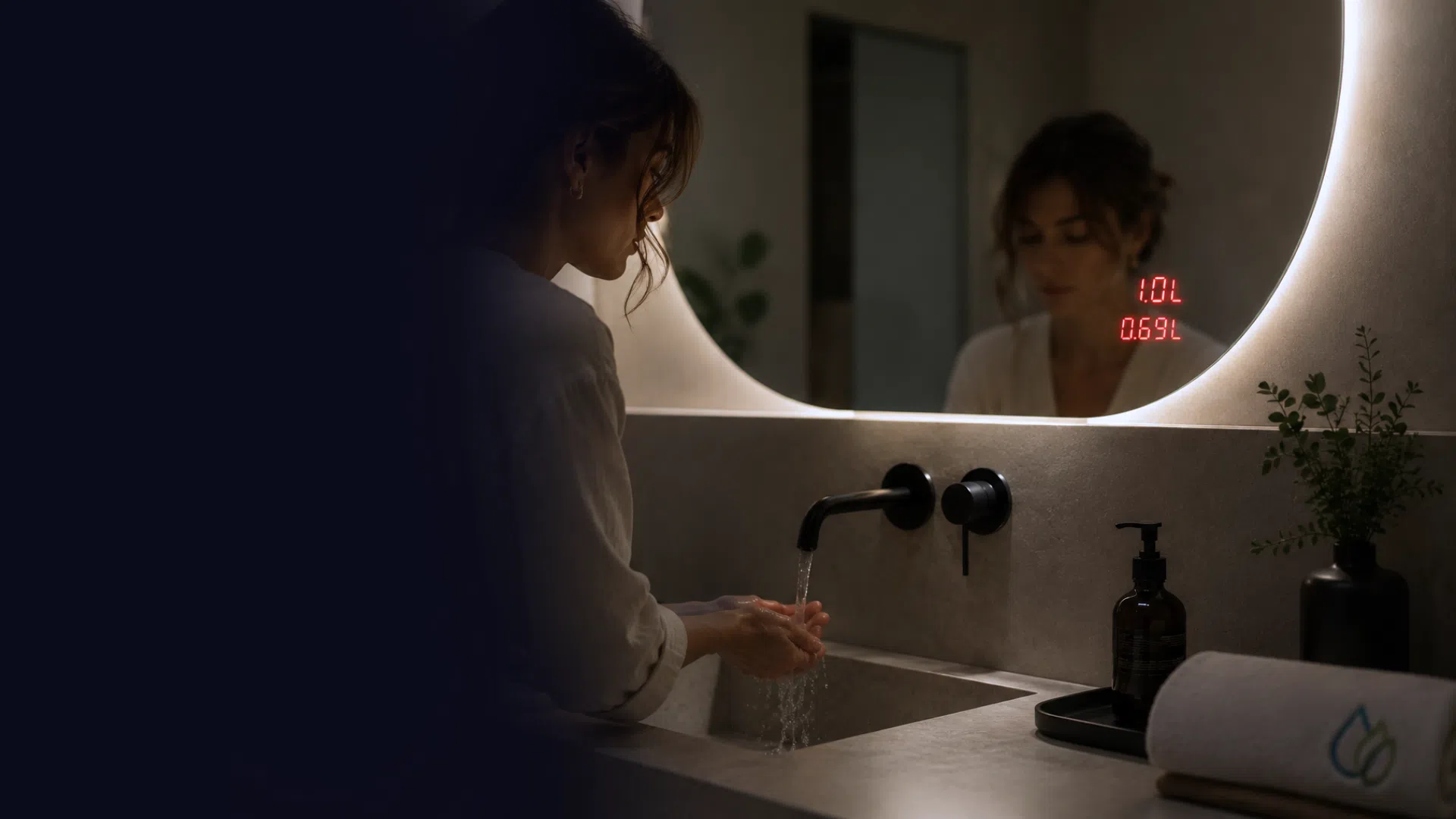
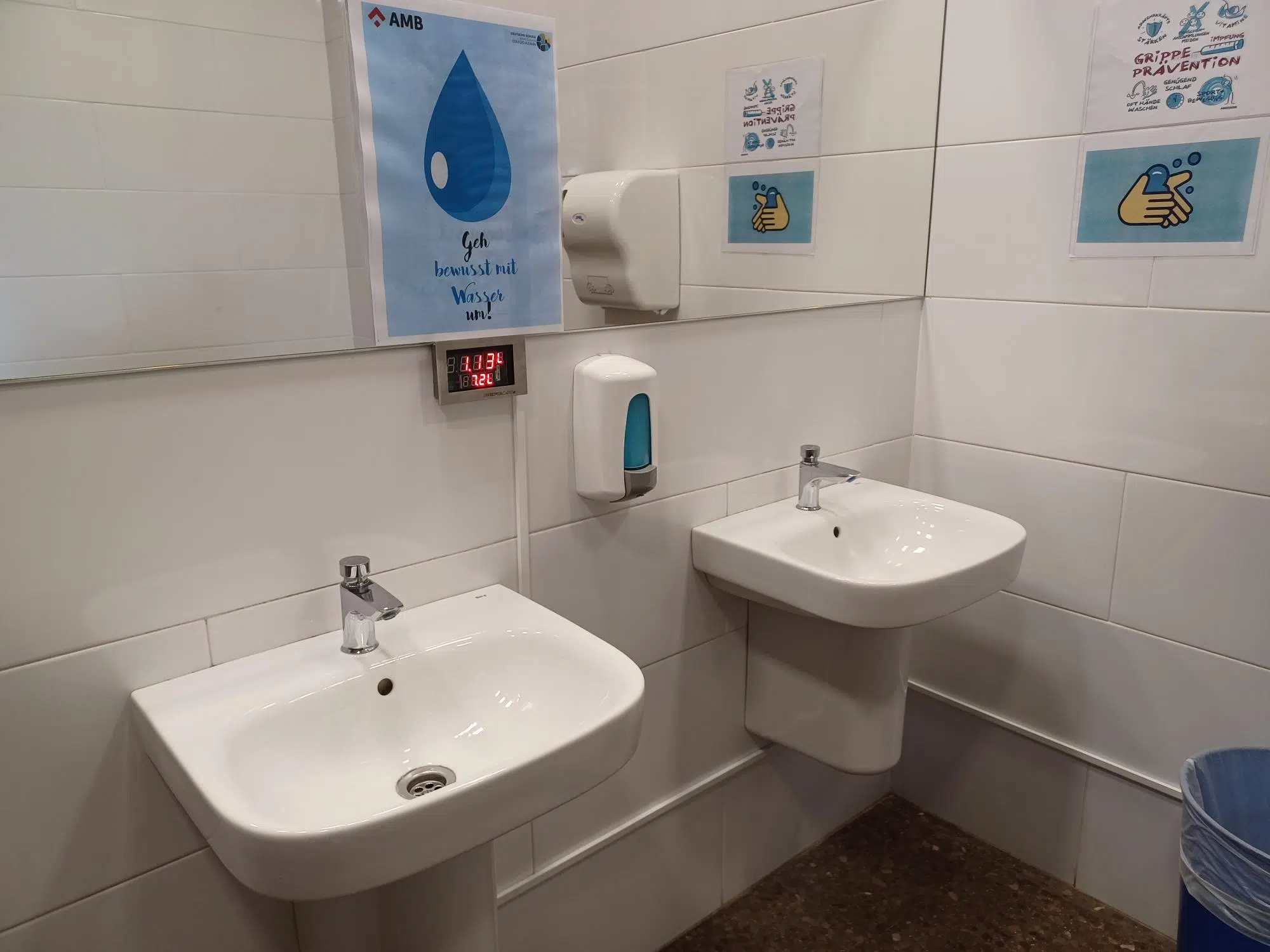
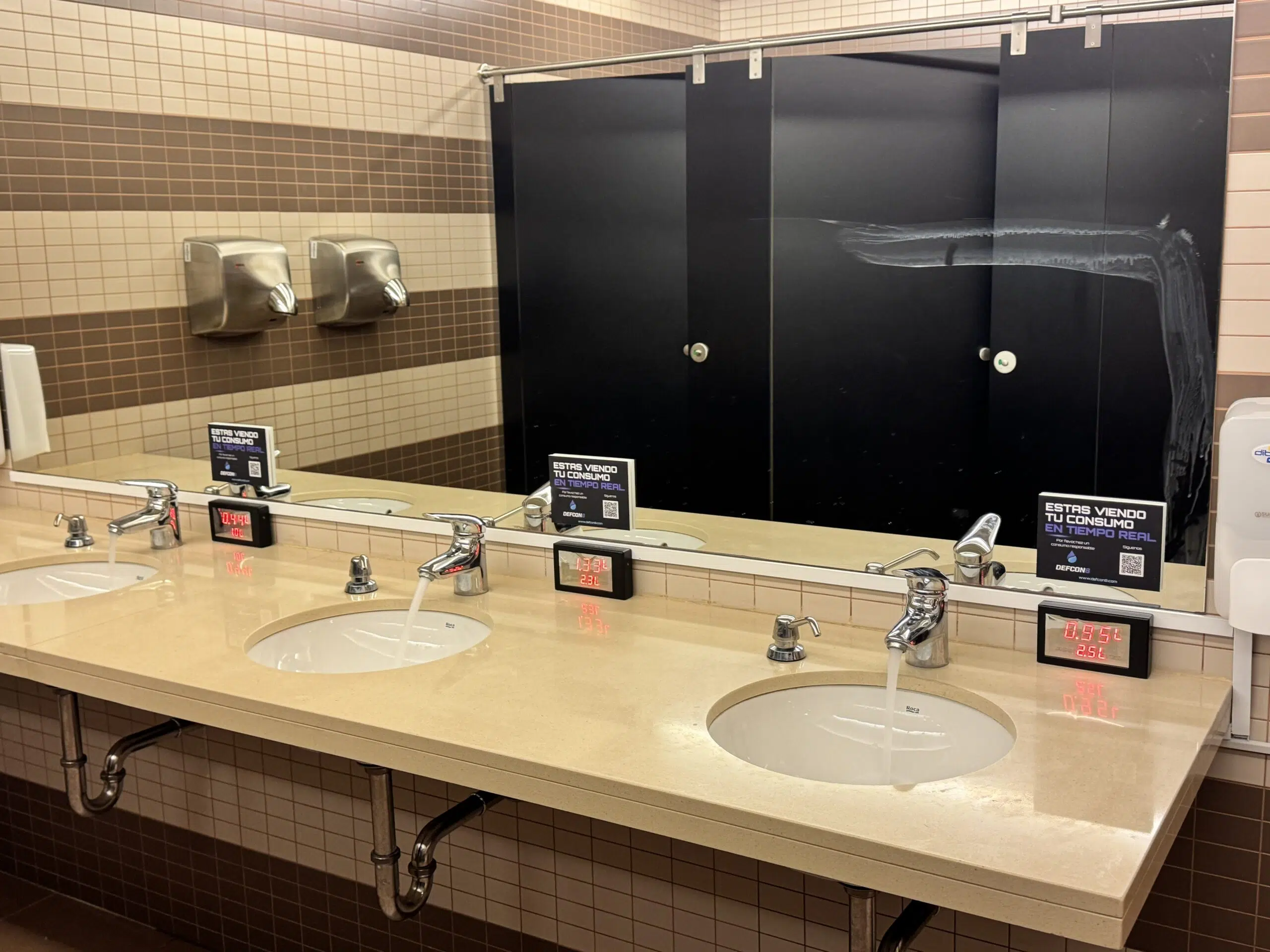
Our patented solution, the Smart Water Flow Monitor (SWFM), measures water consumption across all bathroom fixtures in real time and displays it on an invisible screen integrated into the mirror, showing both instantaneous and cumulative daily consumption. This data is also uploaded to a cloud-based SaaS platform, where maintenance and management teams can monitor cold and hot water consumption and temperature, detect leaks, identify abnormal usage, analyse behavioural patterns and water footprints, and compare rooms to introduce gamification or improve guest loyalty.
The system is based on a simple principle: you cannot improve what you do not measure. That is why the display is so important: without it, there is no behavioural change.
Across the installations we have completed, we have measured water savings of up to 25%, reductions of up to 3% in the energy associated with domestic hot water (DHW), and a proportional decrease in CO₂ emissions.
Defcon8 aims to “make the invisible visible” when it comes to water consumption. How does your technology encourage users to move from indifference to actively considering their daily water use without affecting their experience?
Today, water consumption is invisible. Nobody sees how much water they use when showering, washing their hands or brushing their teeth. Many people leave the tap running without paying attention, almost automatically.
Our technology changes the relationship people have with water consumption without affecting the guest experience. We do not reduce water pressure or flow rate —eco-friendly taps and aerators already serve that purpose and complement our solution—, so there is no coercion or friction. Guests continue using water as they normally would, but they now have the information they need to make a change if they wish, such as reducing their shower time by one minute. Our motto, “Awareness Fosters Savings”, reflects the findings of numerous measurements across different buildings, including hospitality establishments.
At one of our four-star hotels, the director reported a 22% reduction in water consumption in a feature on the Valencian regional television channel À Punt. This represented 1.4 million litres saved annually across 65 rooms. More than 90% of guests gave positive feedback, and over half said they wanted to maintain this behavioural change now that they were aware of their consumption.
The system includes features such as real-time monitoring, leak detection and advanced versions with cloud-connected solenoid valves. How does this data flow work technically, and what role does automation play in responding to excessive consumption or improperly closed taps?
The flow sensor measures litres consumed in real time, sends this information to the display and simultaneously uploads it to the cloud, where the SaaS platform processes it statistically.
This is where leak detection comes in, whether caused by a tap that has not been fully closed or a leaking toilet cistern. If consumption falls outside normal parameters, the system flags it as a potential leak and alerts the maintenance team.
An optional solenoid valve can also be installed to shut off the water supply automatically. At this point, data becomes more than just information: it triggers an action that prevents further damage, for example, to wooden flooring.
Although water conservation is a universal concern, your solutions target homes, hotels, hospitals and schools. Which sectors pose the greatest implementation challenges, and where are the fastest returns on investment achieved?
Our solution is very easy to integrate. We have adapted the SWFM to work with different types of infrastructure, whether in new builds or renovation projects, without requiring complex construction work. In a new build, installation takes just 20 minutes.
We see the fastest returns in hospitality. We install the SWFM from the very beginning of a project, during the design phase, and guest water consumption is high and measurable from the first check-in.
In schools, for example, the Count down (reverse counter) mode makes more sense. Since the number of students tends to remain stable, they can set themselves a consumption target, monitor it every day and adjust it once the target has been reached. It is an effective gamification tool and a way to teach children from an early age not to waste water.
The return on investment (ROI) depends on water prices, the cost of the energy required to heat it (DHW) and the type of building, among other factors. It typically ranges from two to four years.
You mention motivational mechanisms and savings targets, such as the Count up and Count down modes. How important are gamification and behavioural factors in achieving the 20% reduction in consumption you promise?
The data alone already changes behaviour, but gamification accelerates that change. The SWFM has two modes: Count up, which shows how much water has been consumed, and Count down, which shows how much water remains before the previously defined savings target is exceeded.
The reduction does not come from lowering the flow rate. Instead, people choose to turn off the tap sooner because they can see the numbers. We foster empowerment and engagement. To maximise motivation, it is important for users to set their own daily consumption targets rather than having them imposed externally.
Looking ahead, and considering the current climate crisis, what are the next steps in Defcon8’s roadmap to scale this technology internationally and maximise water and energy efficiency?
Our immediate priority is to continue expanding into new-build and hotel renovation projects in Spain, where, according to published reports, the sector “is facing a major hotel construction boom, with more than 500 openings expected by 2030”. At the same time, we are preparing to enter the UK and German markets, where environmental awareness and respect for the environment are much more deeply rooted.
At the product level, our roadmap focuses on expanding integration through open protocols, with architects and engineering firms in mind, particularly those already working with building management systems and sustainability certifications. Our goal is for the Smart Water Flow Monitor to become not an isolated system, but another component of the smart building.
Water and energy efficiency cannot be achieved through a single innovation. They are achieved one data point at a time, in every building. Our approach is to digitise and democratise access to water consumption information for users, not just for the utility companies supplying the water.
You are part of a leading innovation environment such as the Tech Tourism Cluster ecosystem. What synergies do you find through collaboration within this network of traveltech companies, and how does it help you scale your technology in the face of global distribution giants?
The Cluster gives us something no marketing campaign can buy: peer validation. When a hotel sees that Defcon8 has already been tested at another property within the same ecosystem, facing the same challenges around new builds or sustainability, the conversation starts from a different point. We no longer need to explain what an SWFM is; instead, we can explain what we have learned from installing it.
The Cluster also connects us with industry influencers and advisors —consultancies, certification bodies and other traveltech providers— who understand hotel projects from end to end and know how our data fits into the bigger picture. When competing with much larger global players, this local network of trust allows us to compete not on size, but on proximity and real-world case studies within the same ecosystem.
Author

Member of the Research Group on Tourist Accommodation and Catering at the CETT – UB Campus. Professor of Digital Marketing. Lecturer. Member of Scientific Committees of Congresses. Foundrising, Entrepreneurship & Awards CETT Fundació – CETT. Doctor (PhD) University of Barcelona
Recent posts

20 October 2026

08 October 2026

08 October 2026

07 October 2026
Tags
-
Interviews
Subscribe
Subscribe here and stay tunned on what's next