*Content created and provided by Smart Travel News
In a scenario where the tourism and leisure sector faces a fragmented offering and users are experiencing choice fatigue, advanced technology tools are becoming a key ally in rediscovering destinations.
Part of the Tech Tourism Cluster ecosystem, Vizitio was founded with a clear goal: to connect small experience providers across Catalonia with people looking for authentic activities throughout the year, in an intuitive, fast and personalised way.
Through an AI-powered conversational search engine and a unified catalogue of more than 650 activities —from craft workshops and family-friendly wine tastings to mountain routes and kayaking trips—, the platform not only simplifies the online booking process but also aims to decentralise tourism and increase the visibility of local businesses in the face of major global distributors.
To learn more about this project, we had the opportunity to speak with Xavier Sancho, founder and CEO of Vizitio, a marketplace for experiences and activities in Catalonia.
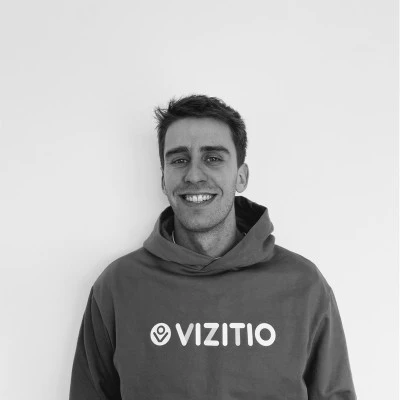
Vizitio is one of the more than 150 members of the Tech Tourism Cluster. Could you briefly explain the main features of your company?
Vizitio is basically the place to find and book activities and experiences in Catalonia. The offering ranges from a pottery workshop or a tasting at a family-run winery to a kayaking trip or a mountain route. We currently have more than 650 activities from local providers, all of which can be booked and paid for online.
There are two things that set us apart. First, personalisation: we want everyone to find what suits them, rather than having to scroll through an endless list. That's why our search engine understands what you write in your own words and recommends activities based on who you're going with, how much time you have, where you are and which day works for you. Second, we bring together in one place an offering that is currently scattered across the region, making it just as easy to find and book an activity in the Pyrenees or the Ebro Delta as it is in Barcelona.
Vizitio was created with the aim of organising and simplifying access to local experiences and leisure activities —from workshops and tastings to outdoor activities— through a marketplace model. How did you come up with this idea to seamlessly connect small experience providers with users looking for something beyond traditional tourism?
It came from a situation that many people will recognise. You want to do something different at the weekend, but end up jumping between websites, Instagram profiles and calling providers to check availability and prices, without being able to compare or book easily. And yet Catalonia has an enormous range of high-quality activities.
On the other side are the providers: a craftsperson, a family-run winery or a mountain guide. They're very good at what they do, but they don't have the time or resources to handle the technological side, and they often remain invisible on major platforms. Vizitio was created to bring these two sides together: users can find everything in one place, quickly and easily, while small providers can sell online without complications. And we're not thinking only about tourists. Many of the people who book through the platform are locals who want to discover their own region.
One of the platform's key features is the way it makes finding activities easier through advanced technology and artificial intelligence, helping users overcome choice fatigue. From a technical perspective, how have you designed the search engine to make the user experience truly intuitive and personalised?
The idea is that you shouldn't have to struggle with filters. You simply write what you're looking for as you would tell a friend. For example, "something to do with kids this Saturday near Girona", and the search engine understands what you want: who you're going with, when, where and how much time you have. Based on that, it only shows you activities that match your needs and have available places.
What's behind it? When you enter a search, a language model interprets the sentence and turns it into specific criteria: age, duration, area, dates and type of activity. These criteria are then matched against the structured data for each activity and the provider's availability calendar. In other words, we don't search by keywords; we combine language understanding with a well-organised catalogue.
That last part is the least visible and the most important. If every listing describes duration, target audience or location differently, no AI can filter effectively. That's why we've invested a great deal of effort in making sure all the information follows the same format.
Beyond being a commercial showcase, platforms like Vizitio have enormous potential to decentralise tourism and encourage both visitors and residents to rediscover destinations beyond the peak season. How do you approach the balance between supporting local businesses and scaling the model?
For us, the local element is precisely what sets us apart. We want activities to be available across all Catalan counties, not just along the coast or in Barcelona, so we're constantly looking for areas where the offering is limited and seeking out new providers. Seasonality is similar: Catalonia has activities available all year round, but they're not always visible, and we tend to focus on summer and major cities. With the wide range of options available on Vizitio, there's always something to do, whatever the time of year.
For us, scaling means leveraging technology to make onboarding and supporting a new provider easy and affordable. For now, we'd rather deepen our presence across Catalonia than expand into new destinations.
With the leisure and tourism experiences market becoming increasingly competitive and fragmented, what are the next milestones in Vizitio's short- and medium-term roadmap to consolidate its growth and expand its community of hosts and users?
In the short term, we have three initiatives underway. The first is giftable experiences: as of this month, any activity in the catalogue can be booked with a specific date and time for personal use, or purchased without a date as a gift, allowing the recipient to choose when to enjoy it. We're supporting this with a gift card, just in time for Christmas.
The second is the integration with Viator. Before the end of the year, its entire offering in Catalonia will also be available on Vizitio, allowing users to find and book those activities in the same way as the rest of the catalogue. This will expand the range of options without changing our search and booking experience.
The third is an affiliate programme with accommodation providers and other tourism businesses, such as travel agencies. The idea is that a hotel or rural accommodation provider can offer guests local experiences directly through Vizitio, enhancing their service while giving local providers an additional sales channel.
In the medium term, we want Vizitio to become the go-to platform whenever someone thinks about what to do in Catalonia. As for providers, rather than simply adding more activities, our priority is to ensure that existing ones remain active, with up-to-date availability calendars and clear descriptions.
You are part of a leading innovation ecosystem such as the Tech Tourism Cluster. What synergies do you find in collaborating within this traveltech business network, and how does it help you scale your technology in the face of global distribution giants?
For a startup like ours, the cluster is above all a network of contacts. It connects us with accommodation providers, travel agencies and technology companies that could become partners, for example, in our affiliate programme. It also connects us with people who have already been through situations we're facing now. We really value this exchange of opinions and experiences.
We don't want to compete with major distributors on volume. Our strength lies in local, proximity-based offerings that they don't have, and in a product designed for people who live here. And when it makes sense, we collaborate with them, as we do with Viator. Being part of the cluster helps us gain an even better understanding of the region through the perspectives of other companies in the sector, which reinforces precisely what sets us apart from the major OTAs.
Author

Member of the Research Group on Tourist Accommodation and Catering at the CETT – UB Campus. Professor of Digital Marketing. Lecturer. Member of Scientific Committees of Congresses. Foundrising, Entrepreneurship & Awards CETT Fundació – CETT. Doctor (PhD) University of Barcelona
Recent posts


02 November 2026

30 October 2026
Tags
-
Interviews
Subscribe
Subscribe here and stay tunned on what's next