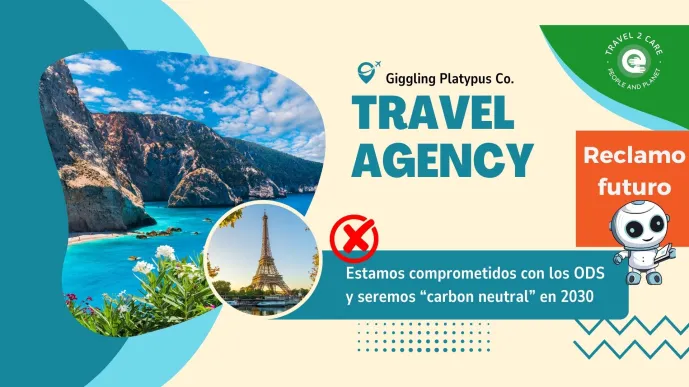
Directive (EU) 2024/825, known as the EmpCo Directive (Empowering Consumers for the Green Transition), will apply from 27 September 2026. Although it will be particularly relevant to the tourism sector, it is not limited to this industry: it applies to commercial practices aimed at consumers and may also affect companies based outside the EU that target the European market.
Its aim is to strengthen consumer protection against misleading environmental claims and to require greater rigour in the way companies communicate their sustainability commitments.
Three key aspects to keep in mind
Simply using words such as “eco”, “green” or “sustainable” will no longer be enough. Generic environmental claims will need to be substantiated and properly documented. The rules also cover images, symbols, names and graphic elements that suggest that a product or service has a positive, reduced or zero impact on the environment.
Not every environmental label or certification will be valid. Sustainability labels must be based on certification schemes or established by public authorities, with publicly available requirements and objective, independent monitoring procedures. This reinforces the value of the work carried out by companies that have committed to genuine processes of assessment, monitoring and continuous improvement.
Particular attention should be paid to climate neutrality claims. The Directive prohibits claims, based on greenhouse gas emissions offsetting, that a product or service has a neutral, reduced or positive impact on the environment.
The consequences can be significant. In certain cases involving widespread infringements or infringements with an EU-wide dimension, the framework requires Member States to provide for fines of up to at least 4% of the trader’s annual turnover in the Member States concerned, in accordance with the applicable national legislation.
What should you review within your company?
The essential question is: “What are we telling consumers, and can we prove it?”
It is advisable to review your website, social media, brochures, campaigns, newsletters and any other commercial communication channels:
- What environmental claims are we making?
- What evidence do we have to support them?
- What labels or certifications do we display, and who certifies them?
- Are we communicating future targets as if they were already achieved results?
- Do our images or graphic elements convey environmental messages that we cannot substantiate?
- Do we have a structured strategy with clear objectives, actions, indicators and supporting evidence?
An opportunity to get things in order
27 September should not be the day to start reviewing these issues, but the date by which companies should already have done their homework.
For companies that do not yet have a structured strategy in place, EmpCo can be an opportunity to define objectives, responsibilities, actions and indicators. For those already taking sustainability seriously, it can become a competitive advantage.
Environmental sustainability should not be an additional marketing claim, but rather an integral part of the company’s overall strategy.
Reviewing our messages, organising our commitments and ensuring that what we communicate truly reflects what we do is the best way to prepare for this new regulatory landscape.
Author
Recent posts


Tags
-
News
Subscribe
Subscribe here and stay tunned on what's next