*Content created and provided by Smart Travel News
In a tourism sector where visitors’ attention is becoming increasingly selective and expectations of immediacy are higher than ever, Artificial Intelligence is emerging as a key tool for connecting with users in a meaningful and reliable way, both intellectually and emotionally. As part of the Tech Tourism Cluster ecosystem, WOWIST transforms the discovery experience in museums, accommodation establishments and destinations through interactive digital specialists capable of engaging in conversations via text, voice and audiovisual content in more than one hundred languages.
By embracing direct-access channels such as WhatsApp, websites and QR codes, thereby removing the barrier of having to download apps, the platform allows organisations to retain control over their own storytelling, adapt their narratives to different visitor profiles and gain valuable insights into visitors’ actual interests.
We speak with Sergi Quinto, CO of WOWIST, to learn more about its frictionless interaction model, the rigour behind the creation of its AI-powered guides, the evolution towards contextual tourism copilots and the value of collaborating within the local traveltech network.
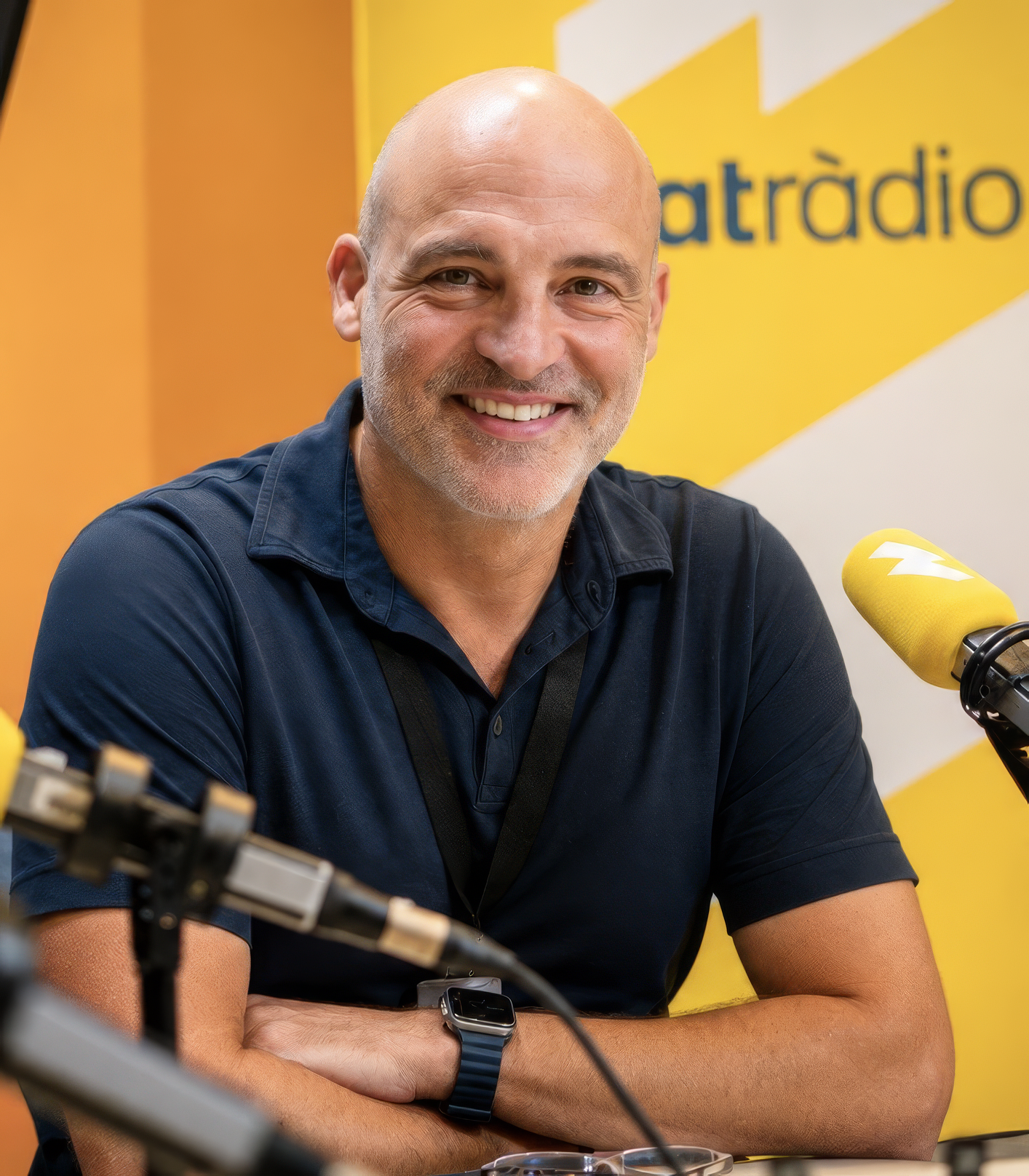
WOWIST is one of the Tech Tourism Cluster’s more than 150 members. Could you briefly explain the main features of your company?
WOWIST is an AI-powered conversational and audiovisual marketing platform for destinations, museums and accommodation providers. We create digital specialists that visitors can interact with to discover a place, a museum or find an experience tailored to their interests. The interaction combines text, voice and audiovisual content, with support in more than one hundred languages.
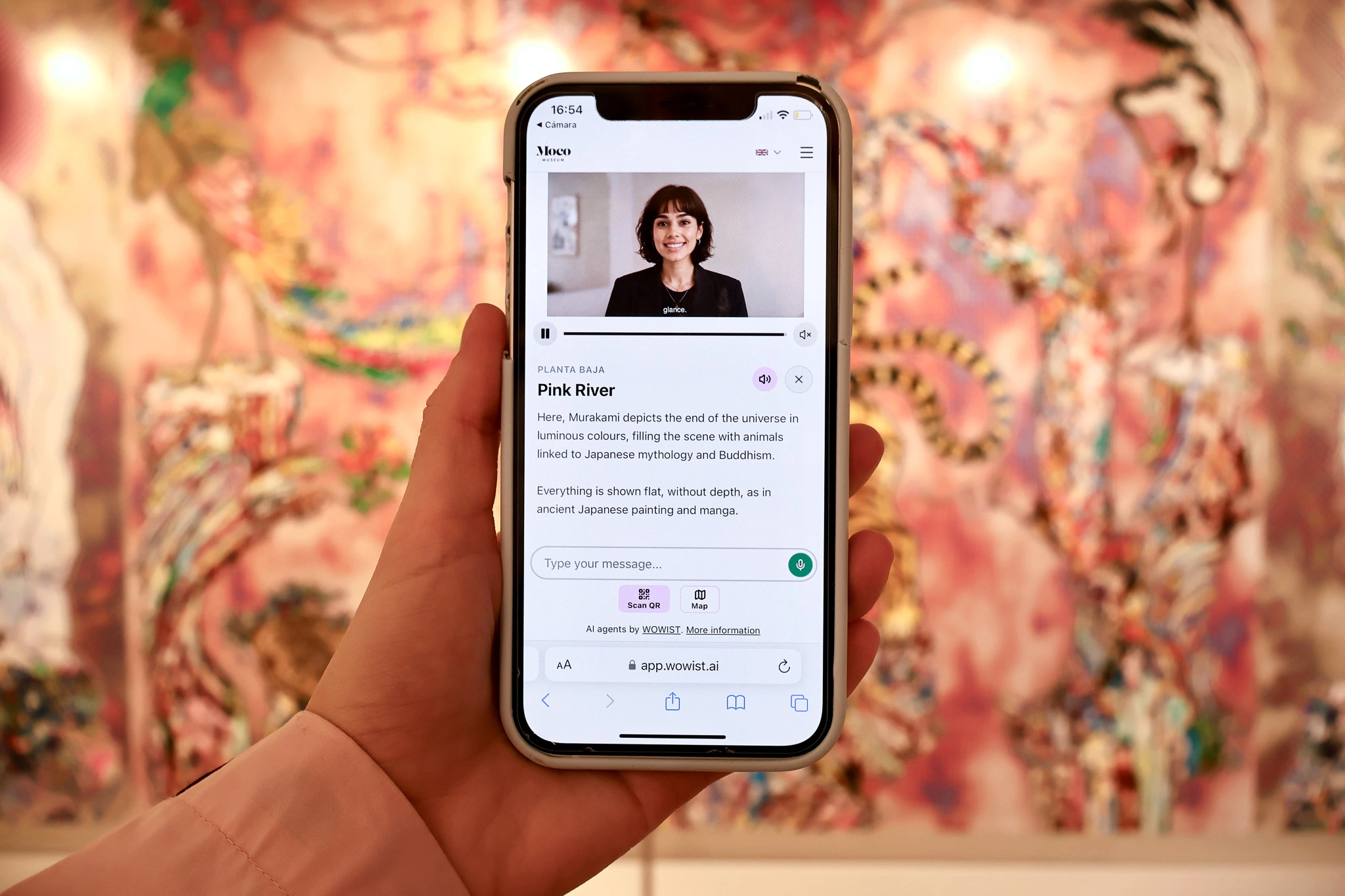
Our offering covers the entire visitor journey: helping people discover a destination before travelling, accompanying them during their visit and subsequently making it easier for them to share their feedback on the experience. For organisations, this means retaining control over their own storytelling and learning from the questions they receive. One example of this approach is the conversational guide at Barcelona’s Moco Museum.
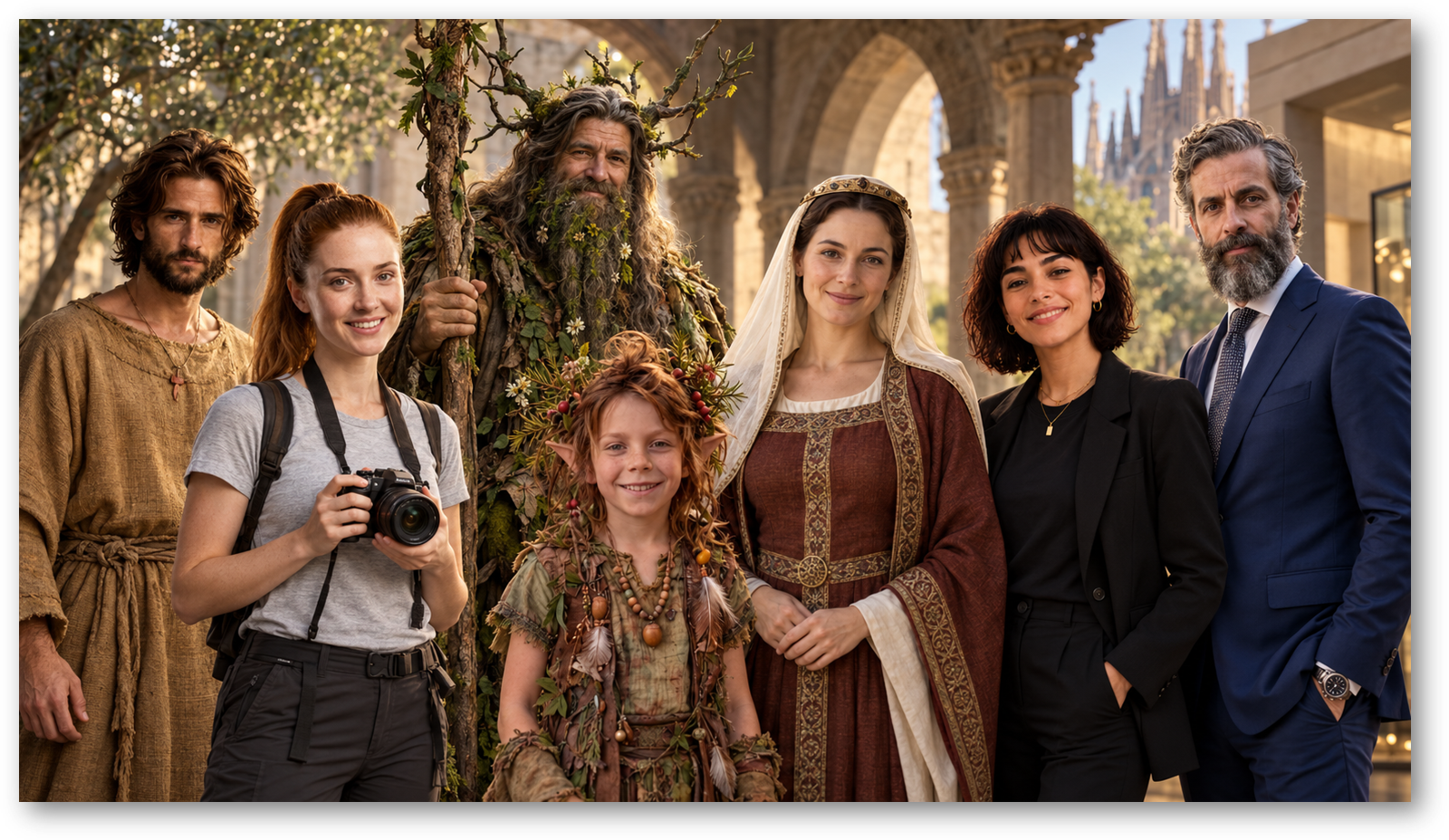
High-profile projects such as the hyper-realistic recreation of historical figures seem to help you clearly differentiate yourselves from traditional chatbots. How do you give a digital specialist personality, historical accuracy and audiovisual storytelling capabilities, enabling them to move beyond automated responses and establish an emotional connection with visitors?
The WOW effect comes from creating the image and personality of the guide visitors will interact with. The image sparks curiosity, but what makes people stay is the conversation: fluid, entertaining and accurate, engaging visitors and encouraging them to spend more time with us. That is why the process begins by defining the guide’s role: what they know, how they speak and what they bring to the visit.
We work with sources and content curated in collaboration with each organisation. On that basis, we develop the guide’s personality, tone and way of explaining things. Historical recreations also require distinguishing documented facts from narrative devices. Giving a character a voice does not mean we can attribute any statement to them or present an interpretation as an established fact.
The audiovisual component makes it possible to show the context that a written answer leaves to the imagination: what a space might have looked like, what was happening around a particular artwork or how a craft was practised. Its value lies in helping visitors understand.
One of the biggest obstacles in digital tourism is users’ reluctance to download specific apps for every destination or museum. Opting for direct-access channels such as WhatsApp, websites or QR codes makes adoption much easier. How does reducing this friction affect tourists’ actual interactions and the volume of data and insights you collect about their interests?
During a visit, attention is limited. If resolving a question requires finding an app, downloading it and registering, people may simply give up. Direct access from their mobile phones allows visitors to start a conversation as soon as their interest arises.
However, removing the need to download an app is only the first step. Signposting, connectivity, response times and the ease of selecting a language or listening to audio all have a significant impact on actual usage. An accessible QR code cannot compensate for a slow or confusing experience. This is an important lesson we have learned from our deployments.
To evaluate interaction, it is useful to distinguish between how many people access the platform, how many engage in a conversation and what level of satisfaction they express. Their questions help identify topics that generate interest, recurring queries and information that is difficult to find. These patterns can guide content and services, provided the information is analysed in aggregate and unnecessary personal data collection is avoided. Accumulating conversations is not an end in itself: the real value lies in turning them into improvements for visitors.
Museums welcome visitors who want to discover the highlights as well as others who could spend half an hour in front of a single artwork. What changes for a museum when an AI-powered guide can interact with each of them and accompany their curiosity?
It changes the possibility of making the museum’s knowledge accessible to very different people, starting with language. Discovering artworks and asking questions in their own language allows visitors to grasp nuances and express themselves naturally.
It also makes it possible to adapt explanations to individual interests — the significance of an artwork, its technique, the artist’s life or the historical context — and decide how deeply to explore each topic, always based on content curated by the museum, which retains control over its own storytelling.
Furthermore, the relationship can begin before the visit, answering questions and encouraging ticket purchases; continue throughout the experience and extend beyond it through feedback or recommendations. There is economic potential, but it stems from the museum’s mission: enabling more people to engage with it, understand what they see and want to recommend the experience.
How do you see the concept of the AI-powered, physical and audiovisual “tourism copilot” evolving over the coming years?
We believe it will evolve towards more contextual assistance: a system capable of understanding what a person is looking at, how much time they have and what interests them, in order to provide relevant support. Conversation will remain important, but it will increasingly be combined with voice, images, video and elements within the physical environment itself.
We also expect greater continuity between pre-trip inspiration and the destination experience, provided users choose to maintain that context. The challenge will be to integrate reliable, up-to-date information, respect users’ decisions and make it easy to involve a human whenever necessary. The best copilot will be one that helps people enjoy a place without requiring them to spend all their time looking at a screen.
You are part of a leading innovation environment such as the Tech Tourism Cluster ecosystem. What synergies do you find through collaborating within this network of traveltech companies, and how does it help you scale your technology in the face of global distribution giants?
For us, the value of a cluster lies in bringing together those of us developing technology with those who understand the operational needs of the tourism industry.
The synergies we find most valuable are those that enable us to work on specific use cases: connecting cultural content with technology, facilitating integrations and designing pilot projects with objectives that clients can evaluate. Sharing knowledge about adoption, visitor services and collaboration models is also extremely valuable.
Our approach to competing with major global players is based on specialisation and proximity to the organisations welcoming visitors. Destinations and cultural venues have their own unique knowledge, which deserves a direct relationship with their audiences. A network of complementary companies can help scale this offering, without expecting a single company to provide every component of the tourism experience.
Author

Member of the Research Group on Tourist Accommodation and Catering at the CETT – UB Campus. Professor of Digital Marketing. Lecturer. Member of Scientific Committees of Congresses. Foundrising, Entrepreneurship & Awards CETT Fundació – CETT. Doctor (PhD) University of Barcelona
Recent posts

10 November 2026

10 November 2026


Tags
-
Interviews
Subscribe
Subscribe here and stay tunned on what's next